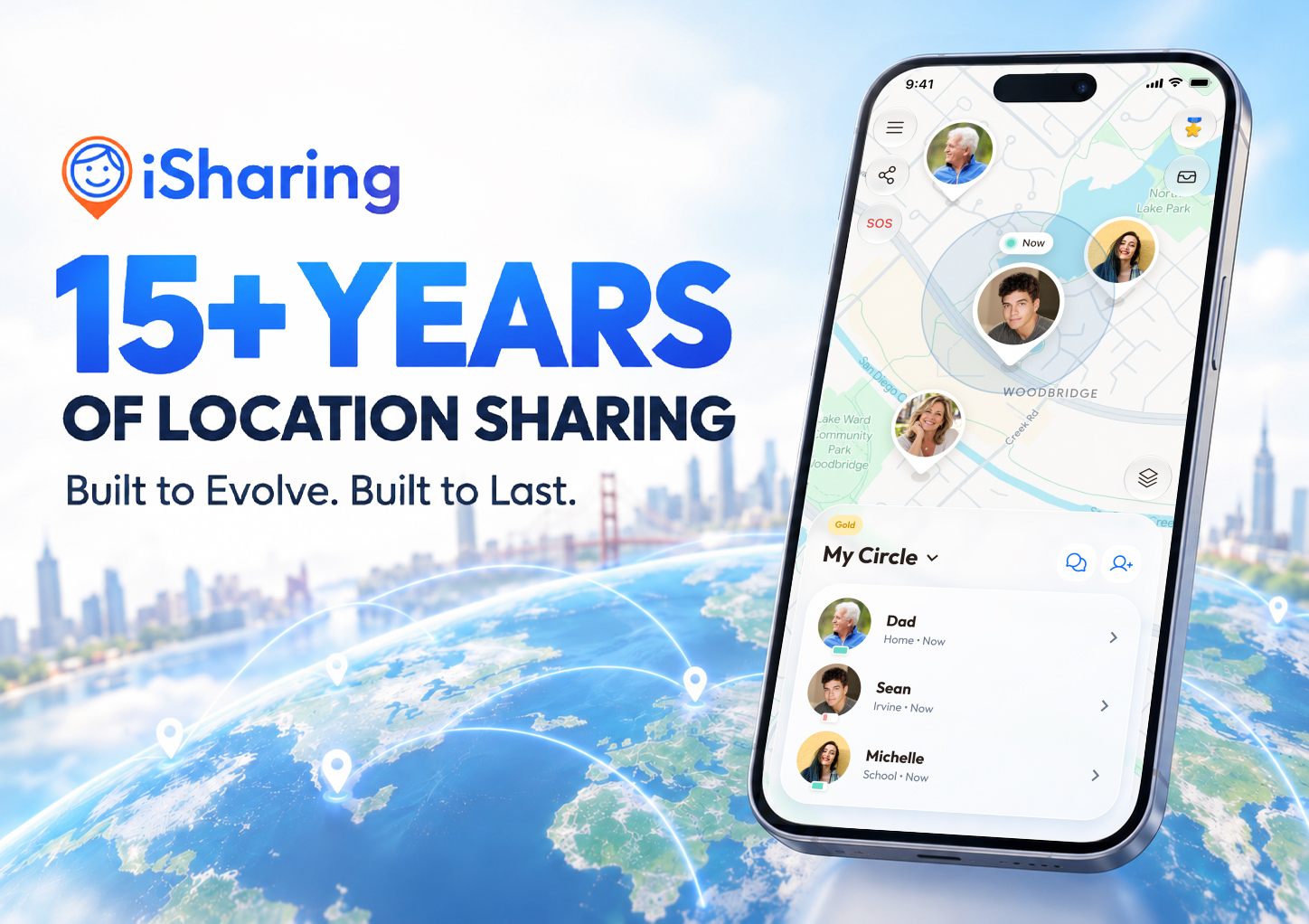
Since 2010, a freemium model and technology built to evolve have kept iSharing useful for friends, couples, parents and three generations of families.
IRVINE, CA, UNITED STATES, October 21, 2026 /EINPresswire.com/ — There’s no shortage of family location-sharing apps. New ones keep popping up, and almost all of them now offer the same core tools: real-time location sharing, place alerts, location history and some kind of safety features. For anyone trying to choose, the options can start to look interchangeable.
Features, design and price still matter. But once a location-sharing app becomes part of a family’s daily routine, another question becomes paramount: will this service still be around and continue to improve years from now?
iSharing has an answer for that specific question that newer apps can’t give yet. The service has operated continuously since its launch in 2010, and for more than 15 years it has kept developing its technology as people’s location-sharing needs have changed.
[More Than 15 Years of Location-Sharing Experience]
When iSharing launched in 2010, sharing your location from your mobile device was still a fairly new idea. Most people used it simply to see where a friend or family member was.
Since then, that has changed a lot. Location sharing is now part of how families coordinate their days and look out for one another. iSharing has grown along with it, adding place alerts, location history, SOS alerts, driving reports and speed detection on top of the core real-time location sharing.
Newer apps often launch with many of these same capabilities. What a feature list can’t show, however, is the experience: a decade and a half of actually running and improving a location-sharing service.
[When Features Look Similar, Service Continuity Matters]
Real-time location, notifications and location history are now standard across the category. Comparing apps on a feature checklist alone doesn’t tell the whole story.
Continuity is harder to see, but it matters just as much. When families, couples or friends switch apps, they have to rebuild their groups, set up their alerts again and get used to a new interface. The habits they’ve built don’t carry over on their own.
And even popular services don’t always last. The shutdown of Zenly, once one of the most widely used location-sharing apps, left its users looking for somewhere new to go.
That’s why iSharing treats long-term continuity as part of the product itself. New features can be built quickly. A long operating history can only be built over time.
[A Sustainable Freemium Model]
Part of what has kept iSharing running for so long is how it’s funded. Basic safety features are free for everyone, and people who want more advanced tools can upgrade to a premium plan. Location sharing is often about knowing the people you care about are safe, so iSharing believes those essentials should be easy for anyone to use. Keeping them within everyone’s reach is part of building a service people stay with for years.
Premium revenue pays for day-to-day operations, technology improvements and ongoing development. For a service that families rely on every day, that steady foundation matters. The model keeps iSharing accessible to everyone while funding the work it takes to keep the service going for the long term.
[Technology That Evolves With Its Users]
Lasting 15 years doesn’t mean standing still. Smartphones, the way families communicate and what people expect from digital safety tools have all changed since 2010, and iSharing has changed with them.
Beyond real-time location sharing, the app now includes SOS alerts, driving reports and speed detection. The goal has shifted from simply showing where someone is to helping people stay connected and look out for each other in everyday situations.
As expectations keep changing, iSharing plans to keep adapting its technology and services to match.
[From Friends and Couples to Children and Aging Parents]
The people we want to stay connected with change over a lifetime.
Someone might first share their location with friends to meet up, or with a partner. Years later, as a parent, they may use the same kind of app to see that their kids made it to school or got home safely. Later still, they might use it to stay connected with aging parents or grandparents.
The purpose of location sharing grows with the person using it. iSharing is built to stay useful through each of these stages: friends and partners, parents and children, and even three generations of the same family.
[Toward a Lifetime Location-Sharing Service]
iSharing’s more than 15 years of continuous operation come down to a few things: a sustainable business model, technology built to evolve and a product that stays relevant as people’s relationships and responsibilities change.
The location-sharing market will keep growing, and features that once set one app apart will keep becoming standard. Longevity works differently. Plenty of apps can match a feature list today, but a 15-year track record can only be earned over time.
iSharing’s goal is to be more than the app people use today. It aims to be a lifetime location-sharing service, supporting the relationships that matter from friendships and partnerships to raising children and caring for parents and grandparents.
More than 15 years. Three generations. One location-sharing service that grows with the people who use it.
[About iSharing]
Founded in 2010, iSharing is a location-sharing and family safety app that helps people stay connected with the people who matter most to them. Along with real-time location sharing, iSharing offers place alerts, location history, SOS alerts and driving safety features. The app is available on iOS and Android to users around the world.
Yunjoo Sophie Park
iSharingSoft
Visit us on social media:
LinkedIn
Instagram
24/7 family safety app
Legal Disclaimer:
EIN Presswire provides this news content “as is” without warranty of any kind. We do not accept any responsibility or liability
for the accuracy, content, images, videos, licenses, completeness, legality, or reliability of the information contained in this
article. If you have any complaints or copyright issues related to this article, kindly contact the author above.

Media gallery