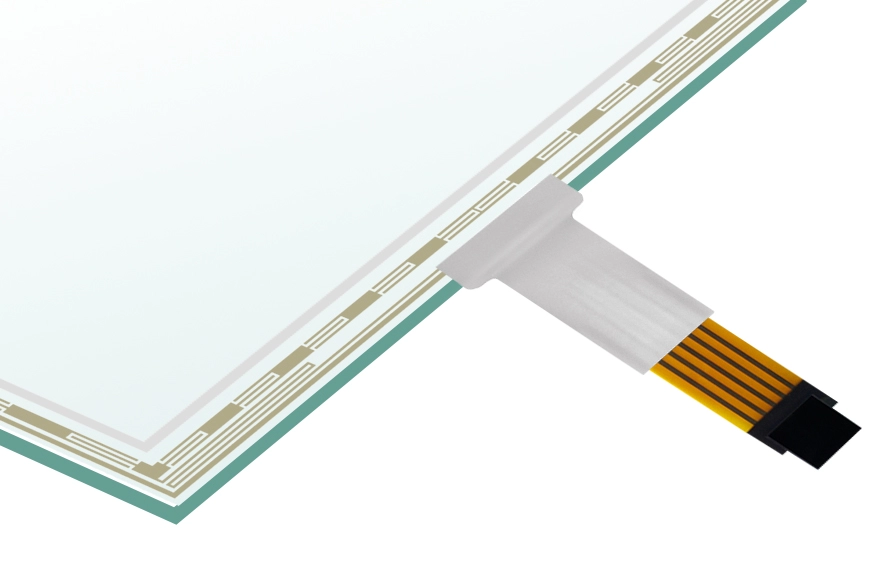
SHENZHEN, GUANGDONG, CHINA, September 24, 2026 /EINPresswire.com/ — Deploying interactive operator interfaces across modern manufacturing plants, automated processing lines, and outdoor infrastructure requires selecting touch hardware matched to operational conditions. Sourcing from an OEM industrial touch screen supplier allows engineering teams to tailor sensor physics, cover glass durability, and regulatory certifications to project requirements. Mismatches between touch technology and operating environments cause false triggers, missed inputs, and premature sensor failure.
Define the Input Method and Operating Environment
Engineering an industrial interface begins by analyzing operator input methods and ambient operational hazards. Workstations where operators wear heavy insulated gloves, leather mittens, or manipulate styluses require different sensor mechanisms than commercial kiosks operated by bare fingertips. Environmental factors including moisture spray, airborne oils, chemical solvents, and electromagnetic noise dictate sensor selection.
Mapping input tools, operating temperature ranges (-20°C to 70°C), storage temperature limits (-30°C to 80°C), and humidity profiles up to 90% non-condensing establishes clear engineering criteria. Factory floors subject to chemical washdowns and mechanical vibration require durable physical isolation. Selecting an experienced touch screen supplier ensures that mechanical integration, controller tuning, and optical performance align with these rigorous industrial demands.
Select PCAP for Integrated Multi-Touch Interfaces
Projected capacitive (PCAP) sensing is a standard interactive technology for modern industrial control panels, medical terminals, and commercial kiosks. PCAP provides smooth multi-touch gestures, rapid coordinate tracking, optical clarity, and flat-front glass integration, creating cleanable surfaces that resist dirt, dust, and chemical accumulation.
PCAP controller firmware can be customized to support operation through thick cover glass (up to 6 mm or 10 mm) while maintaining responsive coordinate tracking and meeting IK08 impact ratings. Advanced controllers incorporate water rejection algorithms that distinguish between intentional user touch and surface moisture droplets or light fluid films. Mutual capacitance electrode grids support up to ten concurrent touch points, providing reliable tracking across diverse input scenarios.
Frequency-hopping algorithms dynamically monitor channel signal-to-noise ratios across driving frequencies from 100 kHz to 500 kHz, shifting operating channels to avoid electromagnetic interference from variable-frequency motor drives, heavy contactors, and high-voltage power equipment.
Select Resistive Technology for Pressure-Based Control
Resistive touch screens remain an essential technology for heavy industrial machinery, agricultural equipment, and marine navigation consoles. Operating through physical pressure rather than electrical conductivity, resistive screens actuate reliably with heavy work gloves, bare fingers, or non-conductive styluses.
Resistive screens are immune to electrical noise, airborne conductive dust, and surface fluids including oils, water, and cleaning chemicals. Five-wire resistive architectures place all active driving electrodes on the bottom glass substrate, using the top flexible film solely as a voltage-measuring probe. This design enables 5-wire resistive screens to endure over 35 million actuations in harsh factory environments without losing calibration.
Structural separation of the resistive layers ensures that surface scratches on the outer film do not interrupt electrical tracking across the sensor matrix, providing dependable operation in demanding workspaces.
Select Infrared or Touch Foil for Larger or Through-Glass FormatsInfrared Touch Frames for Large Industrial Overlays
Large-format supervisory control terminals, automated warehouse dispatch screens, and interactive production status displays benefit from infrared (IR) touch frames. IR frames utilize perimeter arrays of infrared LEDs and phototransistors to detect touch coordinates through light-beam interruption, adding touch capability without placing an extra glass layer over the display panel. Ambient light suppression circuitry maintains accurate tracking in environments illuminated up to 100,000 lux.
Interactive Touch Foils for Through-Glass Architecture
Interactive touch foils feature transparent conductive wire grids laminated directly behind protective glass or acrylic panels. This enables through-glass touch operation through storefront windows, interactive architectural partitions, and vandal-resistant outdoor kiosks, completely isolating the electronic sensor from external exposure.
Review Certification Scope After the Configuration Is Defined
Regulatory compliance evaluation covers the complete interactive sub-assembly. Deploying hardware across North America, Europe, and Asia requires meeting statutory electromagnetic compatibility, electrical safety, and environmental standards. CE mark declarations and FCC Part 15 Class A/B testing verify that the touch module operates reliably in high-EMI industrial environments without emitting disruptive radiation. Standards including EN 55032 for radiated emissions and EN 61000-4-2 for electrostatic discharge (ESD) immunity ensure hardware resilience against factory electrical transients.
For electrical safety, the international CB scheme provides a standardized testing foundation that streamlines regional certifications such as UL. RoHS compliance verifies the elimination of hazardous substances across international supply chains, and HDMI testing confirms signal transmission compliance for integrated display interfaces.
Audit Factory Quality Systems and Cleanroom Capabilities
Manufacturing yield and optical clarity depend on cleanroom infrastructure. GreenTouch operates a Class 1000 dust-free lamination workshop utilizing Glass-to-Glass (G+G) and Glass-to-Film-to-Film (G+FF) bonding processes. This environment allows precise application of anti-glare (AG), anti-reflective (AR), and anti-fingerprint (AF) surface coatings without optical contamination.
Confirm the Choice with a Representative Sample
Theoretical engineering models must undergo empirical testing with representative prototype samples. Prototype evaluation validates touch sensitivity, glove operation, optical transmittance, and mechanical chassis fit under simulated operating conditions before initiating full-scale manufacturing.
FAQ about Industrial Touch Technology and Certification
Industrial equipment engineers and procurement specialists frequently evaluate these technical considerations during hardware selection.
Can PCAP Touch Screens Operate Reliably with Wet Gloves?
Yes. Advanced industrial PCAP controllers feature firmware algorithms that track touch coordinates through thick glove materials while suppressing false triggers caused by water spray or surface moisture.
What Distinguishes 5-Wire Resistive from 4-Wire Resistive Screens?
Five-wire resistive screens place all driving electrodes on the bottom glass substrate, using the top flexible film solely as a voltage-sensing probe. This architecture ensures that surface scratches or wear on the top film do not affect coordinate accuracy, offering significantly longer operating life than 4-wire designs.
Are Component Touch Screen Certifications Valid for the Complete Host Device?
Component-level certificates provide essential baseline testing data, although the complete host machine must still undergo comprehensive CE, FCC, and electrical safety certification within its final operational enclosure.
Compare the Application with GreenTouch Touch Technologies
Selecting the correct industrial touch screen requires harmonizing sensor physics, cover glass durability, interface protocols, and regulatory compliance. Evaluating operational environments and operator workflows enables engineering teams to choose between PCAP, resistive, IR, and touch foil technologies with confidence. Technical procurement teams and equipment designers can submit their application requirements and CAD models directly at https://www.greentouch.com.cn/ for engineering evaluation and tailored sample support.
ShenZhen GreenTouch Technology Co.,Ltd.
GreenTouch
email us here
Visit us on social media:
LinkedIn
Facebook
YouTube
Legal Disclaimer:
EIN Presswire provides this news content “as is” without warranty of any kind. We do not accept any responsibility or liability
for the accuracy, content, images, videos, licenses, completeness, legality, or reliability of the information contained in this
article. If you have any complaints or copyright issues related to this article, kindly contact the author above.

Media gallery