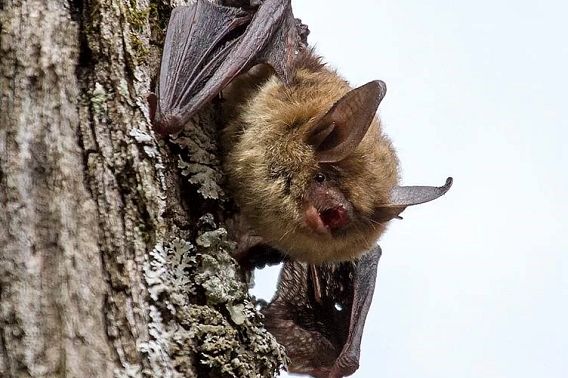
As white-nose syndrome devastates bat populations, conservation efforts at The Ridges offer hope for the federally endangered northern long-eared bat.
BAILEYS HARBOR, WI, UNITED STATES, June 18, 2026 /EINPresswire.com/ — Most folks are all too familiar with the devastation to tree populations caused by numerous invasive pests. One of the latest examples is the emerald ash borer, which has caused massive tree destruction in forests and cities throughout the Midwest. Dead and dying trees are ubiquitous and obvious. Less obvious are population decimations of other species of animals that are only active at night, in specialized habitats, but are also caused by invading pests. Some of Wisconsin’s bat populations have been dramatically reduced because of an invasive fungus.
According to Mammal Ecologist J. Paul White with the Wisconsin Department of Natural Resources, “populations of northern long-eared and tricolored bats in the state crashed to less than 5% of pre-disease numbers.” Because of a similar nationwide decline, the northern long-eared bat (Myotis septentrionalis) has been placed on the federally endangered list. Recently, there have been relatively few documented occurrences of the northern long-eared bat in Wisconsin. However, there is evidence of population persistence at The Ridges Sanctuary near Baileys Harbor, Wisconsin. Because of this evidence, The Ridges is highlighting ongoing conservation, research, and education efforts supporting the federally endangered northern long-eared bat.
White-nose syndrome, a fungal disease caused by Pseudogymnoascus destructans, has killed millions of bats across North America and contributed to the northern long-eared bat’s listing as a federally endangered species. This fungus irritates bats’ wings and noses while they are hibernating, waking them up only partway through winter. Once awoken, hunger and thirst force them to try to find food and water. Once outside their cave, they often starve, become dehydrated, and freeze to death.
Important habitats for these pest controllers and seed dispersers, like fens, sedge meadows, and forested northern hardwood swamps, abound at The Ridges Sanctuary. In fact, recent acoustic monitoring conducted there has confirmed the presence of northern long-eared bats within several areas of the preserve. The WI DNR’s J. Paul White verified the species through recordings collected with portable and fixed acoustic monitoring equipment that detects bat echolocation calls.
The monitoring was conducted in part through baseline surveys associated with the Boreal Climate Survivability Project, a collaborative effort involving The Ridges Sanctuary, the Climate Change Coalition of Door County, the Lakeshore Natural Resource Partnership (LNRP), and the Daybreak Fund. The project seeks to better understand how reforestation and habitat management practices may support the long-term resilience of Door County’s plant and animal communities in a changing climate. For northern long-eared bats, forest restoration efforts can provide important benefits by increasing available roosting habitat and expanding foraging opportunities.
In addition to habitat protection, The Ridges engages the public through educational programming focused on bat conservation. Summer night hikes frequently incorporate portable acoustic monitoring equipment, allowing participants to observe bat activity in real time. The Sanctuary also hosts the annual Wisconsin Bat Wingding each September, featuring presentations, educational activities, and bat house-building opportunities designed to raise awareness of bat conservation needs.
Additional conservation efforts include installing “bat condos” through an Eagle Scout project to increase suitable roosting habitat near key foraging areas within the Sanctuary.
The Ridges Sanctuary remains committed to protecting the habitats that support northern long-eared bats and other native wildlife through research, stewardship, and community engagement. This commitment is reflected in recently planned collaborations with the Wisconsin DNR and the United States Fish and Wildlife Service. “Collaborating with The Ridges will create a dedicated community of conservationists who will help recognize the unique natural habitats and animal resources in Door County. A secretive and rare species like the northern long-eared bat will benefit from such a community of conservationists who will look to document recent species occurrences and habitat through targeted surveys and monitoring, as well as preserve and improve forested habitat.” -J. Paul White, WI DNR
Tony Kiszonas & Victoria Holderer
The Ridges Sanctuary
+1 920-839-2802
email us here
Visit us on social media:
LinkedIn
Instagram
Facebook
YouTube
Legal Disclaimer:
EIN Presswire provides this news content “as is” without warranty of any kind. We do not accept any responsibility or liability
for the accuracy, content, images, videos, licenses, completeness, legality, or reliability of the information contained in this
article. If you have any complaints or copyright issues related to this article, kindly contact the author above.

Media gallery