Originally Posted On: https://www.ucanpack.com/blog/post/why-a-right-sized-shipping-box-beats-bigger-packaging-on-total-cost
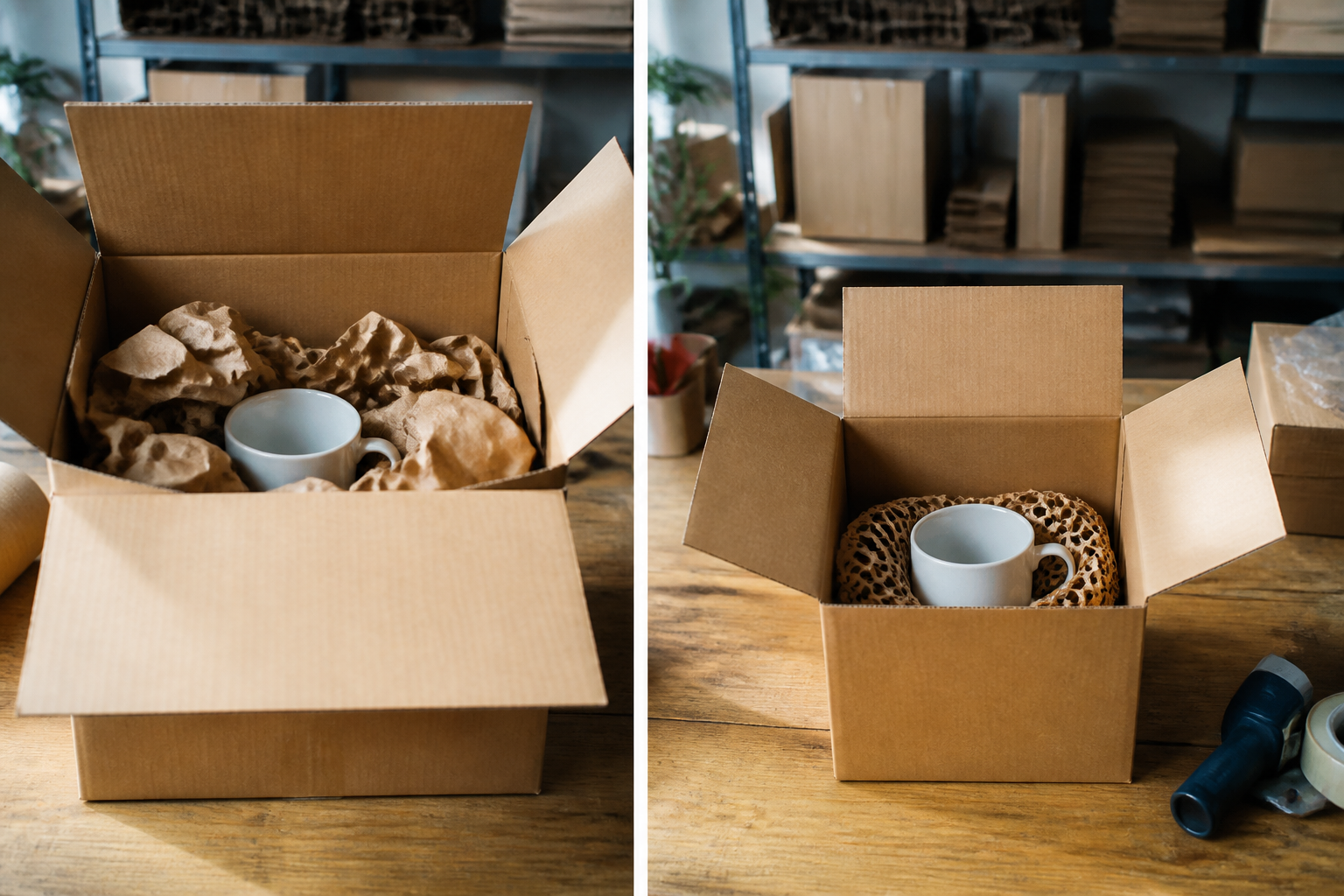
Key Takeaways
- Right-size every shipping box to the product, not the shelf, and trim dead air before it turns into higher dimensional-weight charges and wasted filler.
- Check box dimensions against actual packed-out needs—product size, cushion space, and closure depth—so a small corrugated box can do the job a large carton used to handle badly.
- Cut hidden packaging costs by tracking the extras tied to an oversized shipping box: more tape, more void fill, more labor per package, and more storage space eaten by slow-moving boxes.
- Match cardboard strength to item weight and fragility, because a bigger box isn’t safer if the product shifts inside or the walls are too weak for stacking and delivery.
- Build a short shipping box lineup around repeat order patterns, including staples like 8x8x8 and one or two multi-item sizes, to make pricing, reordering, and packing speed easier to control.
- Swap useless one-box-fits-all habits for a box-sizing plan that uses corrugated mailers, cartons, dividers, or insulated containers only where they earn their keep on protection and presentation.
Oversized packaging quietly drains margin. For a brand shipping 200 orders a month, choosing the wrong shipping box can add hundreds in postage, filler, tape, and packing time before anyone notices the pattern. The box may cost only a few cents more on paper, yet the real hit shows up in parcel charges, slower pack-out, and damaged product from too much empty space. That’s the part founders usually feel later—after reviews dip, replacements rise, and the packing table starts backing up.
In practice, the cheapest carton rarely stays cheap. A right-sized corrugated box does two jobs at once: it protects the item and keeps the package tight enough to avoid paying to ship air. And for small ecommerce teams shipping 50 to 1000 orders a month, that matters more than ever, because carriers keep charging by dimensions as much as weight (sometimes more). So the smart move isn’t buying bigger boxes “just in case.” It’s choosing sizes and board strength that fit the product, the packing flow, and the weekly reorder rhythm.
Shipping box: what small ecommerce teams need right now
Most searches for a shipping box happen minutes before somebody needs to place an order.
- Speed matters. A founder packing 80 orders a week usually isn’t browsing for ideas; they’re trying to match dimensions, check corrugated strength, and lock in pricing before stock runs short.
- Bad box-sizing gets expensive. Oversized cardboard raises parcel rates, needs extra fill, and turns a small package into a larger billable container.
- Wrong specs create damage. A weak single-wall box for glass, candles, or metal parts can fail on delivery routes — and one crushed order can wipe out savings from cheaper packaging.
Why “shipping box” searches usually mean immediate purchasing decisions
Transactional intent is plain here. Teams searching small shipping boxes are often replacing empty stock, testing a new product size, or fixing a fit issue that showed up in fulfillment this week.
The three cost pressures behind the search: postage, damage, and labor
Postage hits first. A 14x10x5 shipping box can beat a larger flat box if it trims void fill and dimensional weight. Damage comes next: heavy-duty shipping boxes make sense for dense items, not every SKU. Labor is the sleeper cost (most teams miss that one); boxes that tape fast and fit right cut pack time by 10 to 20 seconds per order.
How to choose a shipping box fast without guessing on fit or strength
Use three checks: product dimensions, packed weight, and break risk. For shipping boxes fulfillment, keep two or three core sizes, test one 8x8x8 option for small goods, and reserve kraft paper bags for light items that don’t need corrugated walls.
Why does an oversized shipping box raise total packaging cost
Think of it like this: a bigger shipping box doesn’t just hold more air, it makes that air expensive. For brands sending 50 to 1000 orders a month, box-sizing mistakes show up in freight bills, labor time, and damage claims fast.
Dimensional weight turns empty space into added shipping charges
Carriers price a package by actual weight or dimensional weight, and the higher number wins. A light product in a large corrugated container can bill like cargo even when the product itself is small. A 14x10x5 shipping box often costs less to send than a loose, oversized package with flat pads and extra filler because the dimensions stay tighter and the code used by carriers favors less empty volume.
Extra void fill, tape, and packing time add up across 50 to 1000 orders
Oversized boxes need more stuff inside: black kraft, paper, plastic air pillows, bubble, even useless styrofoam booster pieces that add notes, mess, and pricing creep. In practice, heavy duty shipping boxes still need the right fit, not just extra tape on the tops.
- More fill raises per-order packaging cost
- More tape slows delivery prep
- More handling hurts the shipping boxes’ fulfillment flow on busy Saturday runs
That’s why small shipping boxes usually beat one-size-fits-all cartons, and why some teams move soft goods to kraft paper bags instead of empty cardboard.
Most people skip this part. They shouldn’t.
Bigger cardboard boxes can still fail if product movement isn’t controlled
Big boxes don’t always protect better. If a bike part, wine shipper, or single maker item shifts inside, the box can crush at the corners while the product bangs around — even with extra packaging.
How to match shipping box dimensions to the product being packed
How big should a shipping box be? The honest answer is: just big enough for the product, the cushion, and no wasted air.
Use product dimensions plus cushion space to size a corrugated shipping box
A corrugated shipping box should fit the product like a container, not a crate with empty space. For fragile goods, add room for paper, bubble, or cardboard inserts; for soft goods, less extra space works. Teams handling shipping boxes fulfillment often cut dim-weight charges by standardizing 3 to 5 box sizes.
When a small shipping box works better than a large flat carton
Small shipping boxes usually beat large flat packs for cosmetics, supplements, parts, and anything dense. Less movement means less filler, lower pricing, and fewer crushed corners—plus the package looks more intentional (customers notice that). Oversized packaging can make a small product look useless, even cheap.
Choosing single-wall or double-wall cardboard packaging by item weight
Start with weight. Under 10 pounds, single-wall boxes work for most orders; above 30 pounds, heavy-duty shipping boxes or double-wall builds make more sense. If the item is dense, sharp-edged, or headed into cargo networks with rough handling, move up in board strength fast.
Common shipping box sizes for ecommerce orders, including 8x8x8 and multi-item packs
Three sizes cover a lot of ground: 6x6x4 for small parts, 8x8x8 for gift sets, and 14x10x5 shipping box sizes for folded apparel, books, and multi-item orders. Brands shipping candles, mugs, or booster packs also keep kraft paper bags and inserts on hand for clean packing inside the box.
Shipping box styles and materials that cut waste without hurting presentation
Oversized packaging is expensive.
It eats margin in freight, filler, and dim weight charges.
Corrugated shipping boxes vs mailers, cartons, tubes, and insulated containers
Corrugated boxes still do the hard work for mixed orders, fragile goods, and stacked delivery loads—especially heavy-duty shipping boxes for glass, metal, or anything over 8 pounds. For lighter SKUs, small shipping boxes, folding mailers, cartons, and tubes cut empty space fast.
- Mailer boxes: good for cosmetics, apparel extras, and flat packs
- RSC corrugated: better for single or multi-item package protection
- Tubes: posters, prints, bike decals, and rolled product inserts
- Insulated containers: food, wine, and heat-sensitive cargo
A common fix is a 14x10x5 shipping box for medium kits that don’t need a large crate feel.
When custom shipping box printing makes sense at lower order volumes
Short runs can work. If a brand ships 100 to 300 orders a month, one-color outside print on a right-sized shipping box often costs less than extra labels, tissue, and filler (and looks cleaner on arrival). For teams comparing shipping boxes fulfillment options, that math matters.
Paper inserts, cardboard dividers, and other packaging choices that beat plastic or styrofoam
Paper wins more often than people think. Cardboard dividers, folded pads, and kraft wraps hold products in place without the mess of plastic air pillows or styrofoam peanuts. Even kraft paper bags can work inside a box as simple presentation sleeves for small parts, notes, or booster packs.
Real results depend on getting this right.
A practical shipping box purchasing plan for brands shipping every week
Brands that cut box SKUs from 12 to 5 often trim packaging spend by 8% to 15% in one quarter. The surprise is that a bigger shipping box can raise total cost even when unit pricing looks lower—more void fill, higher DIM charges, slower pack times, and more empty space in storage all pile up fast.
Audit current box-sizing and remove slow-moving or useless carton sizes
Start with 90 days of order data. Pull the top order patterns, note product dimensions, and flag any cardboard carton used in fewer than 3% of orders. That usually exposes one or two useless sizes sitting flat on a shelf while packers reach for the same few boxes.
- Keep sizes tied to repeat orders
- Drop odd cartons with weak demand
- Test fewer small shipping boxes before adding extra SKUs
Build a core box lineup with pricing, reorder points, and storage limits
A tight lineup works better. Add shelf limits, too, or bulk pricing turns into warehouse clutter.
And don’t ignore adjacent needs: Kraft paper bags can cover light retail handoff orders, while shipping boxes fulfillment should stay focused on parcel protection and pack speed.
This is the part people underestimate.
What to compare before ordering shipping boxes in bulk: strength, dimensions, bundle count, and delivery timing
Check four things:
- ECT or wall strength for product weight
- Inside dimensions, not just outside code
- Bundle count and pallet quantity
- Delivery timing for weekly replenishment
For fragile or dense goods, heavy-duty shipping boxes can cost more upfront and still save money by cutting damage claims.
The one-box-fits-all habit that looks cheap at purchase and expensive in operation
One-box-for-anything sounds simple. It isn’t. A single large container creates filler waste, slower packing, poor presentation, and higher delivery spend—especially on Saturday orders or boosted promo volume.
Frequently Asked Questions
Does USPS still give free boxes?
Yes, but only for certain mail services. If a seller uses those specific services, the carrier may provide a free shipping box in approved sizes, yet those boxes can’t be used for other shipping methods or mixed into regular cardboard packaging for cheaper rates.
Where can I get a box for shipping for free?
Free shipping box options usually come from carriers, local stores with clean leftover boxes, or a business’s own inbound inventory. Still, reused packaging isn’t always the best call—if the cardboard is soft, creased, or half-crushed, it raises the odds of damage during delivery.
Where is the cheapest place to get boxes?
The cheapest source depends on order volume. For 10 boxes, retail may feel easier; for 100 to 500 units a month, buying corrugated boxes in case packs usually cuts the per-box cost fast, especially if the dimensions are standard like 8x8x8, 10x8x4, or 12x10x6.
How do I get a box for shipping?
Start with the product, not the box shelf.
What size shipping box should be used for a product?
A good rule is to leave about 1 to 2 inches of space on each side for wrap, paper, or another packing material. Small items don’t belong in large containers with extra void space, and fragile goods usually need a corrugated shipping box with stronger walls and tighter box-sizing.
Let that sink in for a moment.
Are corrugated boxes better than plain cardboard boxes?
Usually, yes. Corrugated packaging has a fluted layer between liner sheets, which gives the shipping box more stacking strength and better shock protection than thin flat cardboard, and that matters a lot once a package hits sorting belts, cargo carts, and delivery trucks.
Can a shipping box be reused?
It can, if it’s still rigid, dry, and clean. But here’s what most people miss: one weak corner or a stretched seam can turn a reusable box into a claim waiting to happen—especially for heavier product loads or single-item shipments with no internal support.
What’s better for shipping: a box, a padded mailer, or a plastic bag?
Use a shipping box for breakable items, multi-piece orders, heavier goods, and anything that needs structure. Plastic mailers work for soft products like apparel, while padded mailers fit small non-fragile goods that need light cushioning but not a full corrugated container.
How strong should a shipping box be?
Match the box strength to the item weight and trip length. For most e-commerce brands shipping 50 to 1000 orders a month, a single-wall corrugated box works for everyday products under about 30 pounds, while heavier or more fragile goods often need a higher ECT grade or double-wall packaging.
Is custom shipping box packaging worth it for small brands?
Sometimes yes, sometimes no. If the unboxing moment affects repeat orders, gifting, or subscription retention, custom printing can pull its weight—but only after the brand fixes the basics first: right dimensions, solid corrugated board, clean tape lines, and fewer damage claims.
The cheapest box on the invoice often becomes the most expensive one in the building. A shipping box that’s too large raises parcel charges, burns through filler and tape, and slows packout at the table. Worse, it can still let items shift enough to trigger dents, cracks, and returns. That’s the mistake small fulfillment teams keep paying for twice—once in supplies, again in rework.
The better move is tighter control. Match box dimensions to the product with planned cushion space, keep only the carton sizes that earn their shelf space, and choose board strength by item weight and handling risk (not habit). For brands shipping 50 to 1000 orders a month, even trimming one minute from pack time and a few ounces of dead space per order can change the monthly math fast.
The next step is simple: pull the last 30 days of shipments, list the five box sizes used most often, and flag every order that shipped with more than two inches of empty space. That’s where cost comes down, and consistency starts.
UCANPACK
753A Tucker Rd
Winder, GA 30680
1 201-975-6272


