

PR Newswire
WASHINGTON, Nov. 23, 2026
RILA Communities Foundation launches Holiday Shopping PSA warning consumers about common scams to avoid this holiday season.
WASHINGTON, Nov. 23, 2026 /PRNewswire/ — As the holiday shopping season approaches, and jingle bells start ringing, the RILA Communities Foundation is urging consumers to take extra care when purchasing gifts online and in stores. Scammers are using fake advertisements, look-alike websites, counterfeit products, and exceedingly low pricing to mislead shoppers, steal their money or personal information, and fund illegal and harmful activities.
“The holidays should be a time for families, not an opportunity for criminals to take advantage of consumers. By helping shoppers recognize gift card scams, counterfeit products and stolen goods sold online, we can give consumers the information they need to protect themselves and their hard-earned money,” said Lisa Rufolo, Executive Director, RILA Communities Foundation.
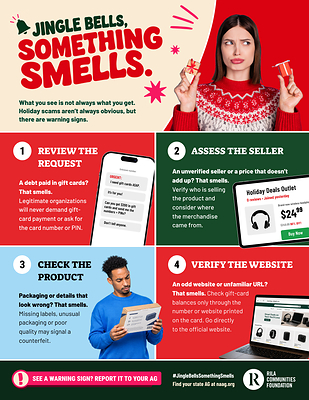
Holiday shopping scams aren’t always obvious, but they do leave clues. Jingle Bells, Something Smells is the RILA Communities Foundation’s holiday campaign, run in partnership with state attorneys general, law enforcement, and state retail associations, to help shoppers recognize warning signs and report suspicious activity to their state attorney general’s office.
Common Holiday Shopping Scams
Gift Card Scams: Scammers love gift cards because once you share the card number and PIN, your money can be gone in seconds. Never let anyone pressure you into buying a gift card or sharing the information on the back of the card. No legitimate business or government agency will demand payment by gift card. If someone tells you to buy a gift card to pay a debt, fine, fee, or emergency expense, something smells. Stop. Don’t pay. It’s a scam.
Think twice before checking that gift card balance online. Scammers create fake balance-checking websites designed to capture your card number and PIN and steal your money. Always go directly to the website or phone number printed on the back of the card. Don’t trust search results, online ads, unexpected texts, emails, or social media links. If you’re being directed somewhere other than the information on your card, something smells. Don’t click. Don’t enter your card information. It could be a scam.
Counterfeits: Counterfeiters know holiday shoppers are looking for a great deal, and they use steep discounts, convincing photos, and look-alike websites to lure consumers into buying fake and sometimes dangerous products. Before you buy, take a closer look at who is actually selling the item, check the seller’s history and reviews, and be suspicious of prices that are dramatically lower than you would expect.
Watch for misspelled brand names, poor-quality images, unusual packaging, vague product descriptions, and websites or sellers you don’t recognize. When possible, buy directly from the brand, an authorized retailer, or a trusted marketplace seller. If the price seems too good to be true or something about the product or seller doesn’t add up, something smells. Stop before you buy. It could be a counterfeit.
Stolen products: Online sellers with little or no verifiable history, and prices that are substantially lower than those offered by established retailers can indicate stolen products being resold. This is a known tactic for organized retail crime rings. A low price may be legitimate, but consumers should independently verify the seller before making a purchase. Be especially cautious when a seller pressures you to pay through a wire transfer, cryptocurrency, gift card, or other payment method that may offer limited protection.
Use Caution With AI-Generated Ads and Websites
Artificial intelligence is being used to create realistic product images, advertisements, customer reviews, and websites. A polished appearance does not establish that a seller is legitimate. Consumers should look beyond the design of an advertisement or website and independently confirm the business, seller, product details, and payment process.
Visit rila.org/ConsumerProtection for 10 Ways to Shop Safe & Protect Your Wallet
Report Suspicious Activity
Consumers who encounter a suspicious seller, fraudulent website, misleading advertisement, gift card scam, or counterfeit or stolen product should report the activity to their state attorney general. Every report can help identify broader patterns of criminal activity and protect other shoppers. Consumers should retain receipts, order confirmations, website addresses, advertisements, messages, payment records, and other relevant information that may assist with a report.
“Scammers are looking to take advantage of shoppers’ generosity this holiday season. Let’s work together to make sure that doesn’t happen. Remember if something smells off, pause and verify before you make a purchase,” said Rufolo.
Starting Cyber Monday, follow the RILA Communities Foundation on LinkedIn for timely tips on how to recognize and avoid shopping scams.

 View original content to download multimedia:https://www.prnewswire.com/news-releases/consumer-alert-jingle-bells-something-smells-rcf-holiday-shopping-psa-campaign-302948666.html
SOURCE RILA Communities Foundation
